
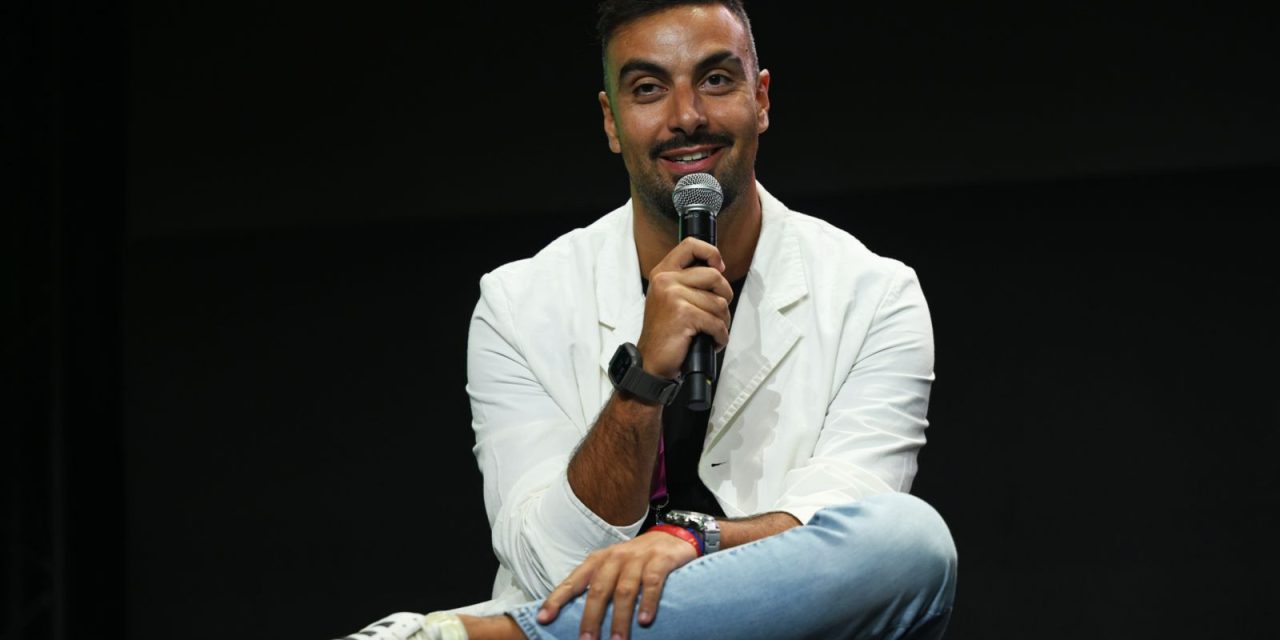
Gaming International Online interviews FootAR’s CEO, David Olim to find out more about his company’s innovative AR gaming platform.
FootAR specialises in augmented reality solutions for sports fans. What are the most recent technological developments or upgrades in your AR platform, and how do they differentiate you from competitors in the sports-&-entertainment or iGaming adjacent space?
FootAR stands out in the augmented reality space for sports fans through an innovative approach that blends augmented and virtual reality with 3D technology, creating immersive experiences that elevate fan engagement with live sports.
One of the most recent and distinctive technological advancements in our platform is the ability to run the immersive experience directly on the user’s device – whether it’s a smartphone, tablet, or AR glasses. This proprietary technology significantly reduces server-side costs by shifting the computational load to the user’s hardware, enabling a seamless and scalable experience.
As we often say internally, our unique value lies in how we enhance sport through 3D by adding a reality that blends with augmented and virtual reality. This fusion not only enriches the user experience but also positions FootAR as a cost-efficient and technically agile solution, particularly relevant for the sports entertainment and iGaming-adjacent sectors.
Could you share some recent success metrics – for instance, user engagement, retention, conversion, or AR session lengths – that demonstrate how FootAR is resonating with sports fans? What are the KPIs you focus on?
FootAR is still in the early stages of its operational journey, and we are transparent in acknowledging that we do not yet have specific metrics such as user engagement, retention, or conversion rates for our AR platform. At present, our performance indicators are largely informed by our previous experience in the media sector.
However, we have already observed promising signs of impact. Our solution has proven effective in encouraging users to spend more time on our partners’ platforms, driven by their desire to follow live sporting events through our immersive experience. As noted internally, it helps to ensure users remain longer on our partners’ platforms because they want to follow the sporting event.
Additionally, our technology has demonstrated strong potential in addressing key market challenges, offering a secure and engaging solution that delivers value to both users and content partners.
As we continue to grow, we are focused on developing robust KPIs around session duration, user interaction within AR environments, and platform retention, which will help us better understand and optimise the value we deliver to sports fans.
What monetisation models have you found most effective so far for FootAR – e.g. sponsorships, in-app purchases, brand partnerships, advertising overlays, or data licensing? Are there any early surprises in what works best?
FootAR has found that a B2B monetisation model is the most effective approach so far. This model enables close collaboration with brands and partners, allowing them to license the technology and integrate it into their own ecosystems. Through strategic brand partnerships and licensing agreements, FootAR not only generates revenue but also empowers its partners to monetise the solution themselves. This dual benefit has proven to be a strong driver of adoption and scalability.
Interestingly, this model has outperformed more traditional monetisation methods such as in-app purchases or advertising overlays, highlighting the value of deeper integration and co-monetisation with business partners.
From an operator or affiliate perspective, in what ways can iGaming companies integrate your AR solutions to enhance their products (e.g. live betting, fan predictions, loyalty programs)? Do you have live clients in that area yet?
iGaming companies can integrate FootAR’s AR solutions easily by adding a 3D button within their existing ecosystem, enabling users to unlock a new live match tracker in 3D. This feature delivers an innovative and immersive perspective, boosting engagement in products such as live betting, fan predictions, and loyalty programmes.
We are actively developing strategic partnerships and are in advanced discussions to finalise an agreement with a leading Sportsbook operator for this integration. At present, we do not yet have live clients in the iGaming sector, but it remains a key strategic priority for us.
Given the strict regulatory landscape in iGaming, what regulatory, licensing or compliance challenges do you face when offering AR experiences tied to sports betting or gambling content? How do you navigate them across different jurisdictions?
FootAR navigates the strict regulatory landscape by ensuring that our experience is always aligned with the legislation in force. We believe that adding an additional layer of interaction to sports events does not breach existing regulatory or compliance requirements, as the experience is directly linked to how users already engage with live sporting events.
This approach allows us to remain compliant across different jurisdictions while enhancing user engagement without altering the rules or mechanisms of betting.
Augmented reality in sports often requires access to real-time data, licensing, broadcasting/rights deals. Can you tell us about your content/data partnerships, and how FootAR secures the rights needed for immersive fan experiences?
FootAR partners with leading sports data providers to secure the real-time data required for delivering immersive fan experiences. We leverage their data and insights to create the 3D environments that power our AR solutions.
On top of this, we apply our proprietary ‘secret sauce’ to enhance the experience while ensuring that all data used carries the necessary rights for distribution. This approach guarantees compliance and allows us to deliver engaging, fully licensed AR content to fans worldwide.
As you scale up, what are the biggest technical infrastructure challenges you anticipate (or are facing) – e.g. latency, bandwidth, device compatibility, AR-hardware fragmentation – and how are you solving them?
Our main challenge as we scale is maintaining low latency and broad device compatibility without inflating infrastructure costs. FootAR addresses this through a user-hardware-first approach: the immersive experience is processed directly on the user’s device – whether a smartphone, tablet, or AR glasses – rather than relying on heavy server-side rendering. This significantly reduces latency, minimises bandwidth requirements, and mitigates AR hardware fragmentation, while ensuring a responsive and scalable experience.
Which geographic markets are you targeting next, especially with respect to regulation, sports fandom, and iGaming maturity? Do you see some markets being more promising than others for AR-sports-fan/gambling crossovers?
FootAR is currently focusing on two key markets: the United Kingdom and Brazil, while also running tests in Portugal. The UK is a mature market that is constantly seeking ways to differentiate in an increasingly competitive landscape, making it ideal for innovative AR-driven engagement.
Brazil, on the other hand, represents an emerging market with massive adoption potential and a highly passionate sports fan base. It offers the opportunity to reach a large audience, although it requires adapting our platform to local mobile preferences.
Our strategy combines one established market and one high-growth market, both of which we see as highly promising for AR sports fan engagement and iGaming crossovers.
Looking ahead, what new features, products, or innovations is FootAR planning – perhaps using AI, more immersive AR hardware, social/interactive features or new sports genres? How do you see the product evolving over the next 12-24 months?
Over the next 12–24 months, FootAR is focused on aligning with the latest AR hardware developments, including Apple Vision Pro, Meta Quest, and the upcoming Meta Highband devices. Our goal is to ensure full compatibility and integrate our tools seamlessly with these platforms.
Our vision is to enable truly immersive betting experiences – where all it takes is putting on a pair of AR glasses that feel natural and stylish, rather than bulky or futuristic. We are actively working to make this scenario a reality, combining cutting-edge hardware with our AR innovation to deliver the next generation of fan engagement.
For iGaming operators or affiliates considering deploying FootAR integrations, what sort of ROI (return on investment) have you observed or project? Could you provide examples or case studies that illustrate how partnering with FootAR has impacted revenue, customer acquisition, or retention?
We expect a strong ROI for iGaming operators by engaging a new generation of users who prefer interactive 3D experiences over traditional match trackers. This approach unlocks new monetisation opportunities and drives deeper engagement.
For example, in Portugal, we partnered with a media company to monetise a sports event that previously generated no revenue. By creating a 3D digital environment, we delivered a unique fan experience and introduced premium sponsorship opportunities. Our objective is to replicate this model with iGaming operators to enhance acquisition, retention, and revenue growth.


